12 November 2026
How to Find Student Halls Near Your University
Presented by @thestudenthome
Start with a Location-First Search
The first step in any student halls search is to pin down where you need to be. University campuses are rarely a single building. Many have multiple sites, a main campus a mile from the city centre, and separate lecture halls spread across town. Before you look at any accommodation, find out which campus or department you will spend most of your time at. Check your university’s website for the precise address of your faculty or school. If you are studying at a university with several campuses, like the University of London or Manchester Metropolitan, knowing which one you belong to will save you from ending up in halls that are convenient for the wrong part of the city.
Once you have the location, open a map and note the transport links. Student halls that look close on paper might be separated by a river with a single bridge, or by a railway line with limited crossings. Walk the route in Street View if you can. A fifteen-minute walk on a sunny afternoon can become a forty-minute slog in winter rain. The goal is to find accommodation that keeps your daily commute reasonable, ideally under twenty minutes on foot or by bus.
Decide What Matters Most to You
Not all student halls are the same. Some are run by the university itself, often called university-owned halls or catered halls. Others are private purpose-built student accommodation (PBSA) built and managed by specialist companies. Both have their pros and cons. University halls tend to be cheaper and closer to campus, but they can be older and may offer less choice in room type or contract length. Private PBSA is usually newer, with en-suite rooms, gyms, and common rooms, but it often comes at a higher rent.
Make a shortlist of your priorities. Do you need a quiet study environment? Look for halls that advertise silent study floors or limited social spaces. Do you want to be in the middle of the social scene? Then a hall with a large common room, cinema room, and regular events might suit you. Do you have a budget that cannot stretch beyond a certain point? Then factor in bills: some halls include utilities, internet, and contents insurance in the rent, while others add them on top. Knowing your priorities before you start searching will help you filter out options that are not right for you.
Use a Specialist Search Platform
A general search engine can return hundreds of results, many of which are out of date or irrelevant. A dedicated platform like Hallbookers, Student Accommodation UK find student accommodation narrows your search to verified private halls in the city you are looking at. You can filter by location, price, room type, and contract length, which saves time compared to scrolling through ten different letting agency sites. The platform also shows photos, virtual tours, and a full list of amenities, so you can compare halls side by side without visiting each one in person.
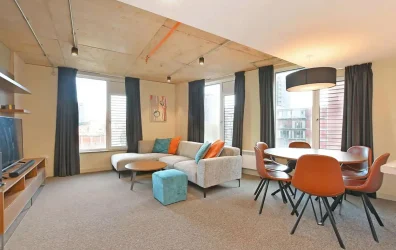
When you use a specialist search tool, pay attention to the details. Look at the distance from the hall to the university, but also to the nearest supermarket, launderette, and bus stop. Check the contract terms: most PBSA offers 44-week or 51-week contracts, and if you only need accommodation during term time, a 44-week deal might be better. Some halls offer summer storage for your belongings, which is a small but useful perk if you are moving home for the holidays.
Read the Fine Print on Contracts
Before you sign anything, read the tenancy agreement carefully. Student halls contracts are often straightforward, but they vary in important ways. Look for clauses about early termination: what happens if you need to leave before the contract ends? Some halls allow you to find a replacement tenant, while others charge a penalty. Check whether the rent includes all bills or only some. If utilities are extra, ask for an estimate of the average monthly cost. Also check the deposit scheme: your deposit should be protected in a government-approved scheme, and the contract should say which one.
Another detail worth checking is the guest policy. Some halls allow overnight guests, others do not. If you plan to have friends stay over, make sure the hall permits it and find out if there is a limit on the number of nights per month. Also check the noise policy: some halls have quiet hours, especially in study zones, and breaking them can lead to warnings or fines.
Visit in Person or Take a Virtual Tour
Pictures can be misleading. A room that looks spacious in a photo might feel cramped once you are inside. If you can, visit the halls in person before you commit. Many PBSA providers offer open days or individual viewings. During the visit, check the condition of the communal areas: the kitchen, laundry, and common room. Look for signs of wear, like broken locks, stained carpets, or mould in the bathroom. Talk to current residents if you can. They will give you an honest sense of the social atmosphere and the responsiveness of the management.
If you cannot visit in person, most halls offer a virtual tour or a video walkthrough. Watch it carefully, paying attention to the size of the room, the quality of the furniture, and the layout of the building. A virtual tour cannot replace being there, but it can help you rule out options that do not match your expectations.
Compare Amenities and Social Offerings
Student halls are more than just a place to sleep. The amenities can make a big difference to your daily life. Look for halls that offer a gym, a study room, a cinema room, or a games room. These spaces help you stay active, study without going to the library, and socialise without leaving the building. Some halls also host events like pizza nights, quiz nights, or fitness classes. If you are new to the city, these events can be a great way to meet people.

However, do not be swayed by flashy extras alone. A hall with a rooftop terrace and a coffee machine might look appealing, but if the rooms are small and the management is unresponsive, you will not enjoy living there. Balance the amenities with the practical factors: room size, storage, heating, and internet speed. Most PBSA offers high-speed internet included in the rent, but check the speed and whether there is a data cap. Slow internet can be a real frustration, especially if you rely on it for studying and streaming.
Again, a platform like Hallbookers, Student Accommodation UK find student accommodation can help you compare these details across multiple halls at once. Use the filters to narrow down by the amenities that matter most to you, and read the descriptions carefully to see what each hall offers.
Check the Location for Social Life and Practicalities
Being close to the university is important, but so is being close to the things you need. Look at what is within walking distance: supermarkets, takeaways, pharmacies, and public transport stops. If you do not drive, a hall that is a ten-minute walk from a bus stop or train station is much more convenient than one that is a twenty-minute walk from the nearest shop. Also consider the safety of the area, especially if you will be walking home late at night. Check local crime maps or ask current students about the neighbourhood.
Social life matters too. If the hall is in a quiet residential area, you might have to travel to find bars, clubs, or student events. If it is in the city centre, you will have everything on your doorstep but might face more noise. Think about your own habits. Do you prefer a lively atmosphere where people are always around, or do you need peace and quiet to focus? The location of the hall will shape your experience, so choose a location that matches your lifestyle.
Make a Shortlist and Apply Early
Once you have done your research, make a shortlist of two or three halls that meet your criteria. Contact each one to confirm availability and ask any remaining questions. Some halls offer early-bird discounts or incentives for booking before a certain date, so it pays to apply early. Popular halls in university cities can fill up months before the start of term, especially for the best rooms. If you wait until August or September, you may find that the halls you wanted are full and you have to settle for a second-choice option.

When you apply, have your documents ready: proof of identity, proof of student status (like your acceptance letter), and a guarantor if required. Most PBSA providers ask for a holding deposit to secure the room, and that deposit is usually refundable for a short period if you change your mind. Read the terms of the deposit before you pay. Once you have signed the contract and paid the deposit, you are committed, so be sure before you proceed.
Finding the right student halls takes a bit of time, but the effort is worth it. A good hall can make your first year at university comfortable, social, and stress-free. A bad one can be a constant source of frustration. By starting early, using a specialist search tool, and checking the details carefully, you can find a place that suits your budget, your lifestyle, and your studies.
Hallbookers, Student Accommodation UK on social media
 Facebook
 Instagram
 YouTube
 Pinterest